Regional styles
What is chili? Depends where you are.
Nine families of chili, each with its own rules, rituals and partisans.
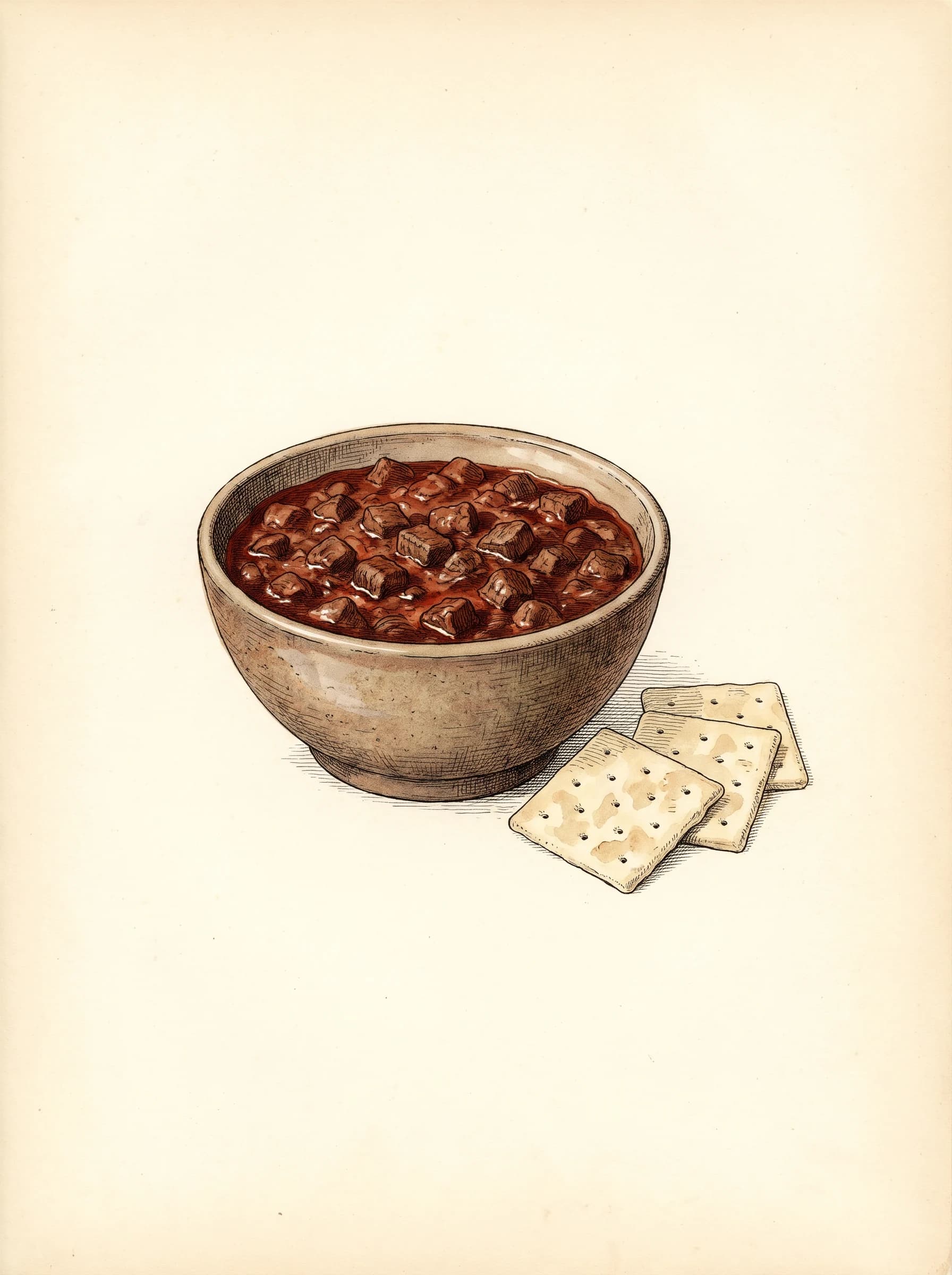
No. 1Texas, especially San Antonio
Texas Red
Beef and dried chiles. No beans.
Texas red is a stew of beef and dried red chiles, the bowl most people picture when they hear the word chili. It grew up in San Antonio’s plazas and became the official state dish in 1977. Competition cooks in Texas hold it to strict rules, and beans are the famous line in the sand.
Beans: NeverTomatoes: OptionalPasta: Never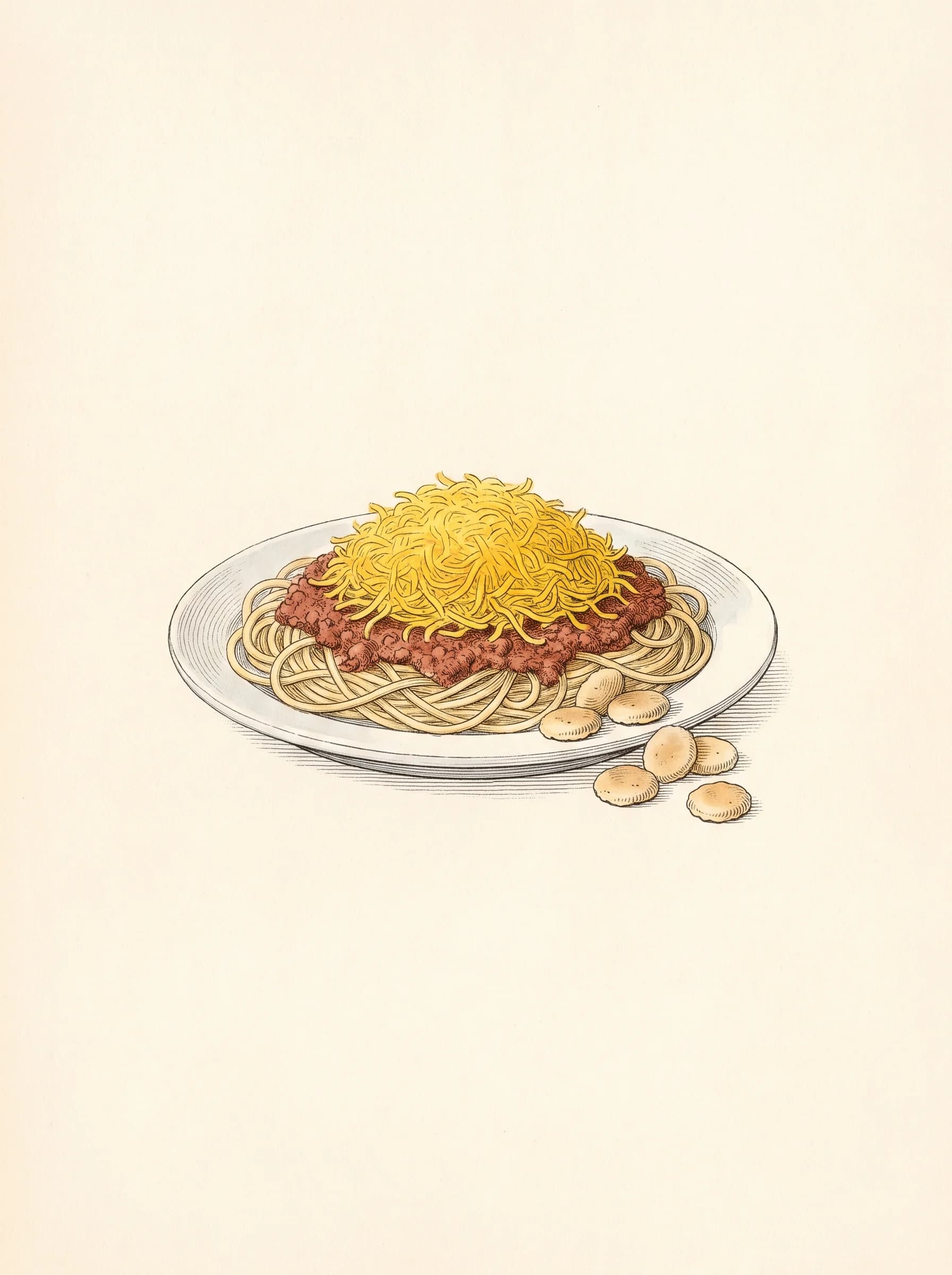
No. 2Cincinnati, Ohio
Cincinnati Chili
Spiced meat sauce over spaghetti, ordered by number.
Cincinnati chili is a thin, warmly spiced meat sauce created by immigrant restaurateurs in the 1920s. It goes over spaghetti or hot dogs, almost never alone in a bowl. Locals order it by number, and the numbers matter.
Beans: OptionalTomatoes: ExpectedPasta: Expected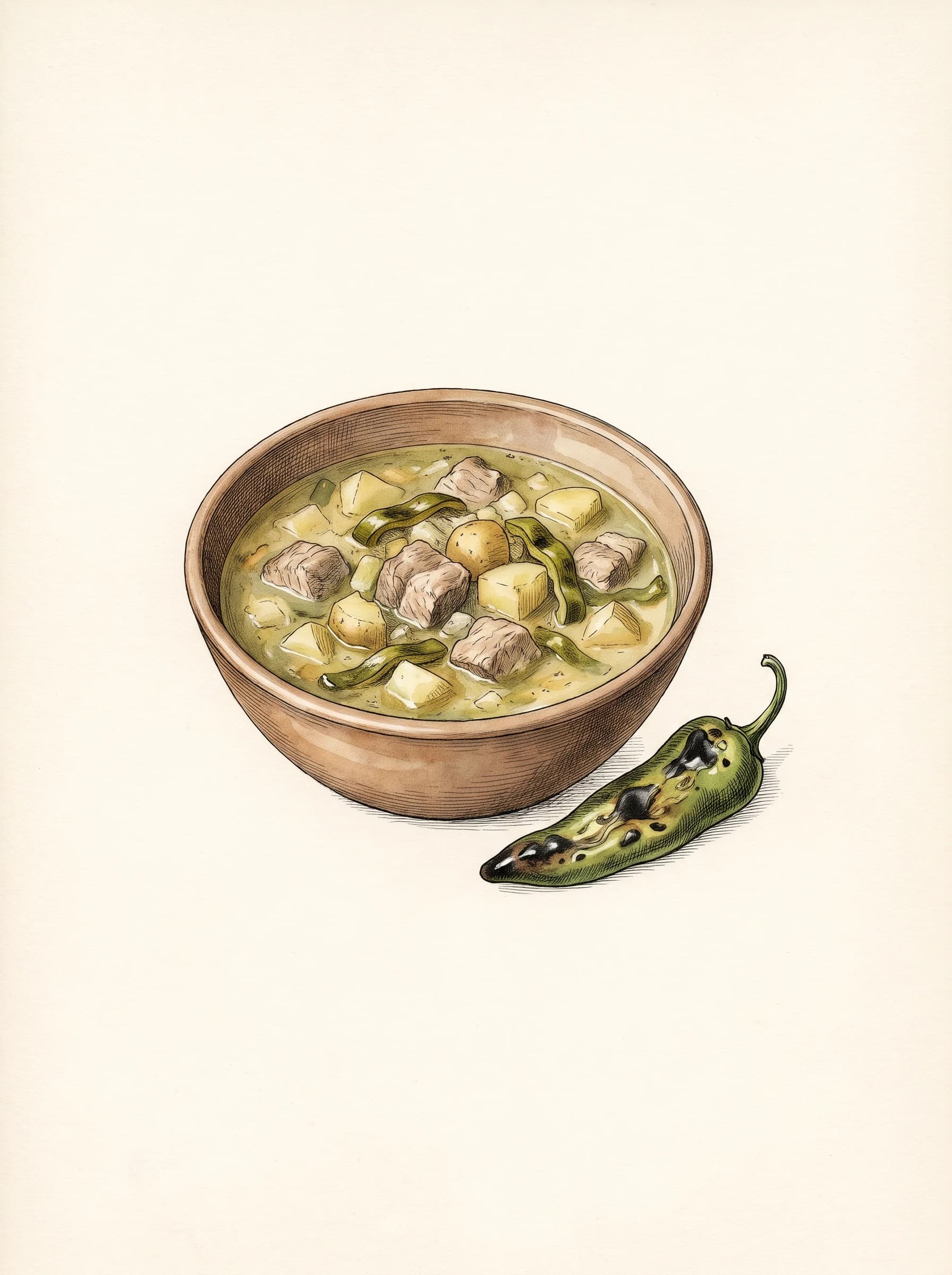
No. 3New Mexico, from the Hatch Valley to Chimayó
New Mexico Chile
Red or green chile, stewed with pork.
In New Mexico, chile with an e means the pod and the sauce made from it, and it goes on nearly everything. Red is dried ripe chile; green is roasted at harvest. The state even has an official question about it.
Beans: OptionalTomatoes: OptionalPasta: Never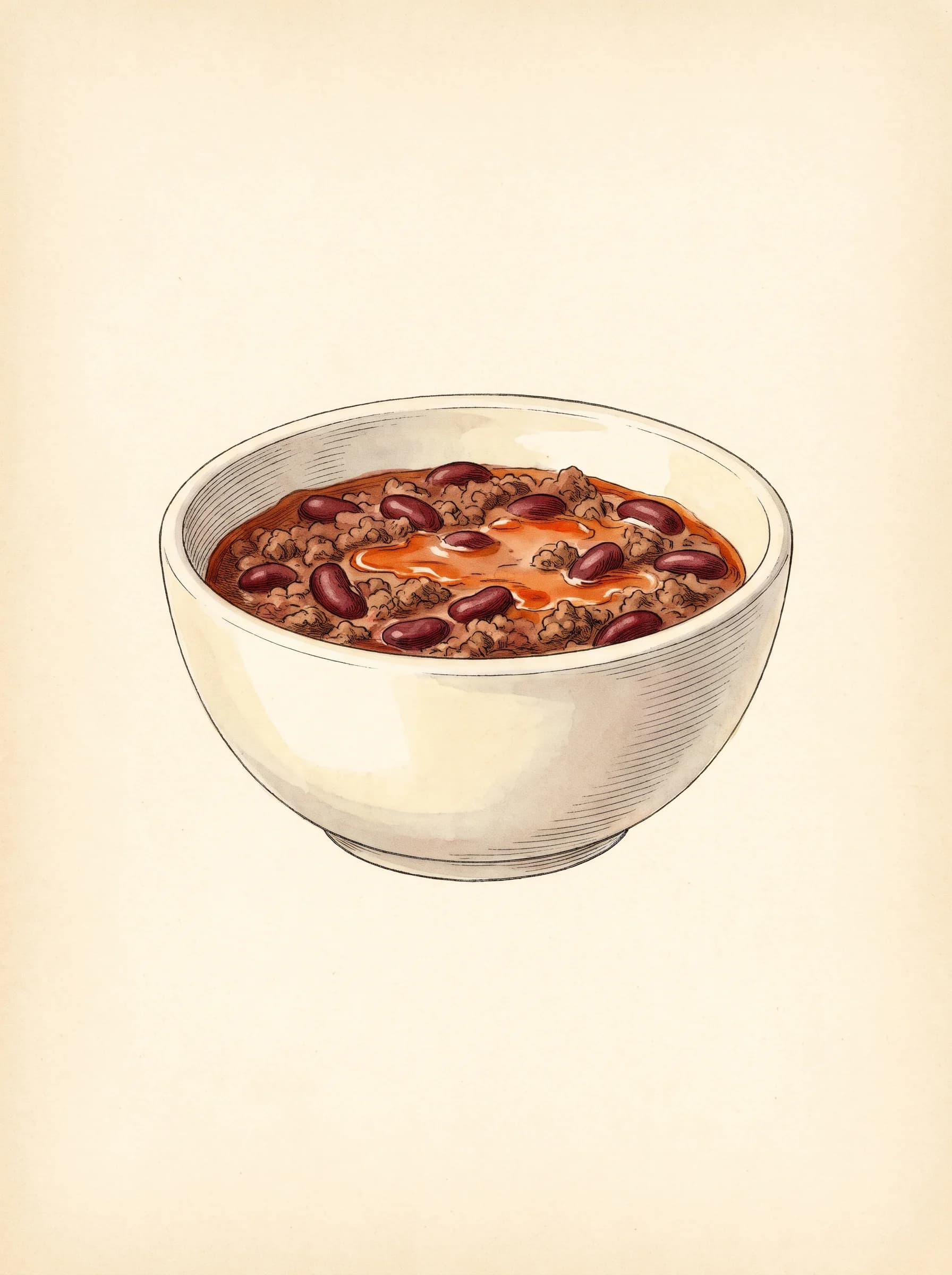
No. 4Springfield, Illinois
Springfield Chilli
Spelled with two Ls. Graded by heat.
Springfield, Illinois spells it chilli, and has since at least 1909. The local style is rich and saucy, built on finely ground beef and often beef suet, with beans usually added at the counter. The city calls itself the chilli capital, and the state agreed in 1993.
Beans: OptionalTomatoes: OptionalPasta: Optional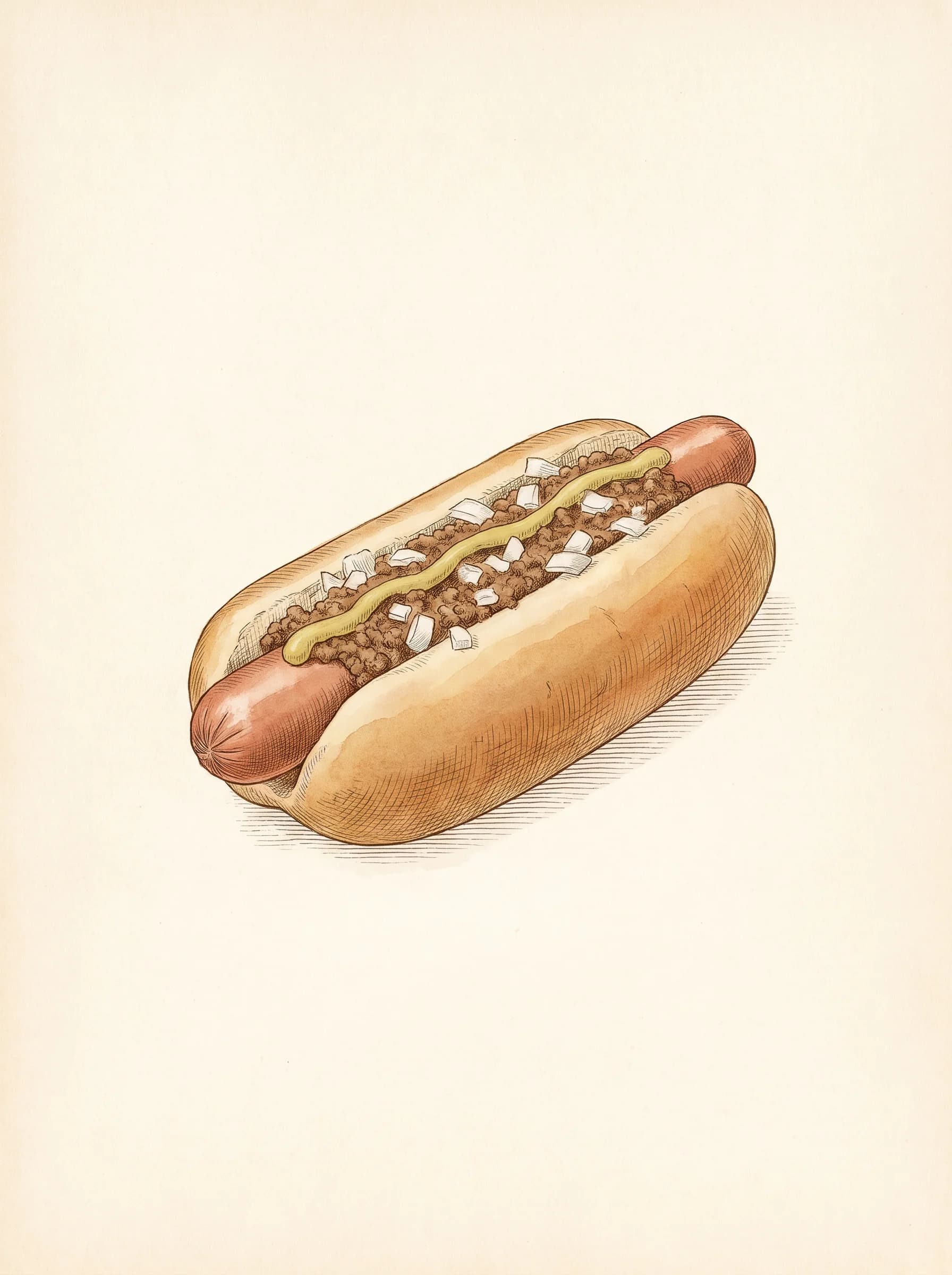
No. 5Michigan, especially Detroit, Flint and Jackson, and coney towns elsewhere
Coney Sauce
A meat sauce for the hot dog.
Coney sauce is a fine, beanless meat chili made to top a hot dog with mustard and onion. Greek and Macedonian immigrants built coney stands across the Midwest in the early 1900s. Michigan argues with itself over wet sauce versus dry.
Beans: NeverTomatoes: OptionalPasta: Never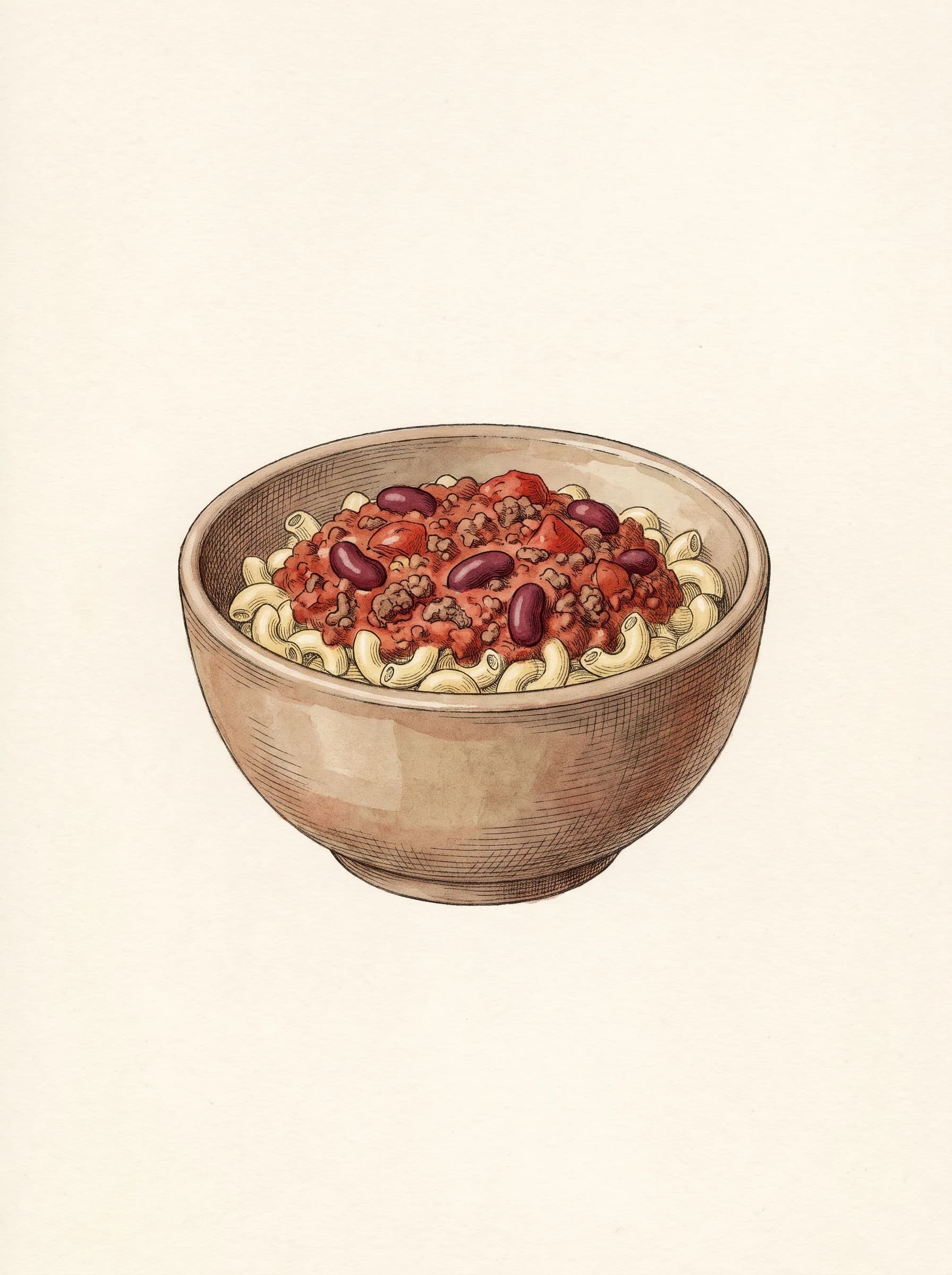
No. 6The Midwest, from Indiana to Nebraska
Midwest Chili
Beans, tomatoes and ground beef. In the Plains, a cinnamon roll on the side.
Across much of the Midwest, chili means ground beef, beans and tomato, often stretched with pasta. It is home and cafeteria food more than competition food. In some states it comes with a cinnamon roll on the side.
Beans: ExpectedTomatoes: ExpectedPasta: Optional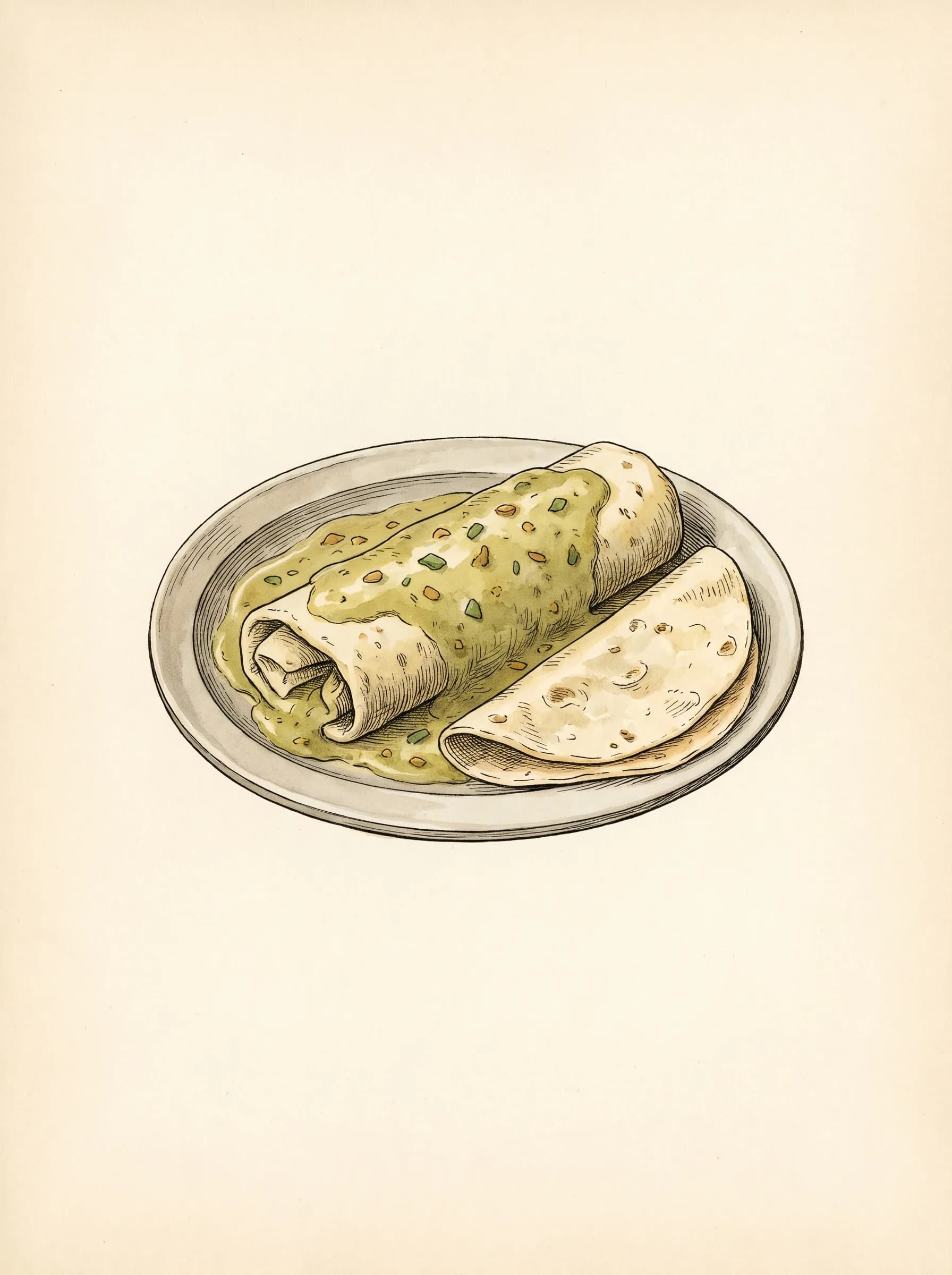
No. 7Colorado, especially Pueblo and Denver, and New Mexico
Chili Verde
Pork and roasted green chile, ladled over the plate.
Chili verde is pork stewed with roasted green chiles. In New Mexico it is usually eaten as green chile stew. In Colorado it is thickened with a flour roux and poured over burritos, rellenos and hamburgers, an order called smothered. The International Chili Society judges it as a separate competition category.
Beans: OptionalTomatoes: OptionalPasta: Never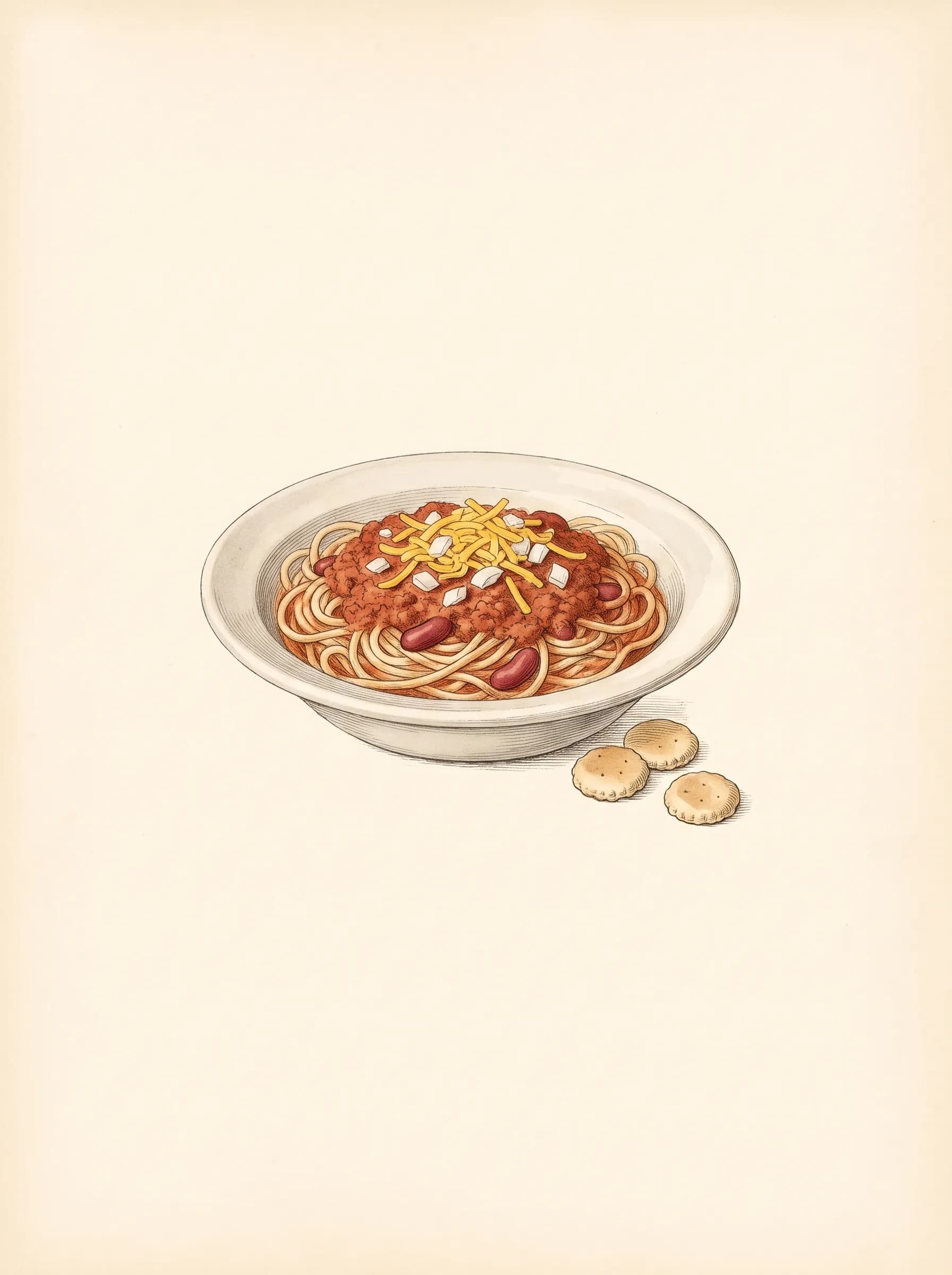
No. 8Joplin, Missouri, and Tulsa, Oklahoma
Spaghetti Red
Parlor chili over spaghetti, on Route 66.
Spaghetti red is chili ladled over a plate of spaghetti, the signature of Fred & Red’s in Joplin, Missouri, since the 1920s. Down the road in Tulsa, Ike’s Chili has offered chili on spaghetti since at least 1913. Both parlors keep their recipes secret, and neither chili uses the sweet spices of Cincinnati.
Beans: OptionalTomatoes: OptionalPasta: Expected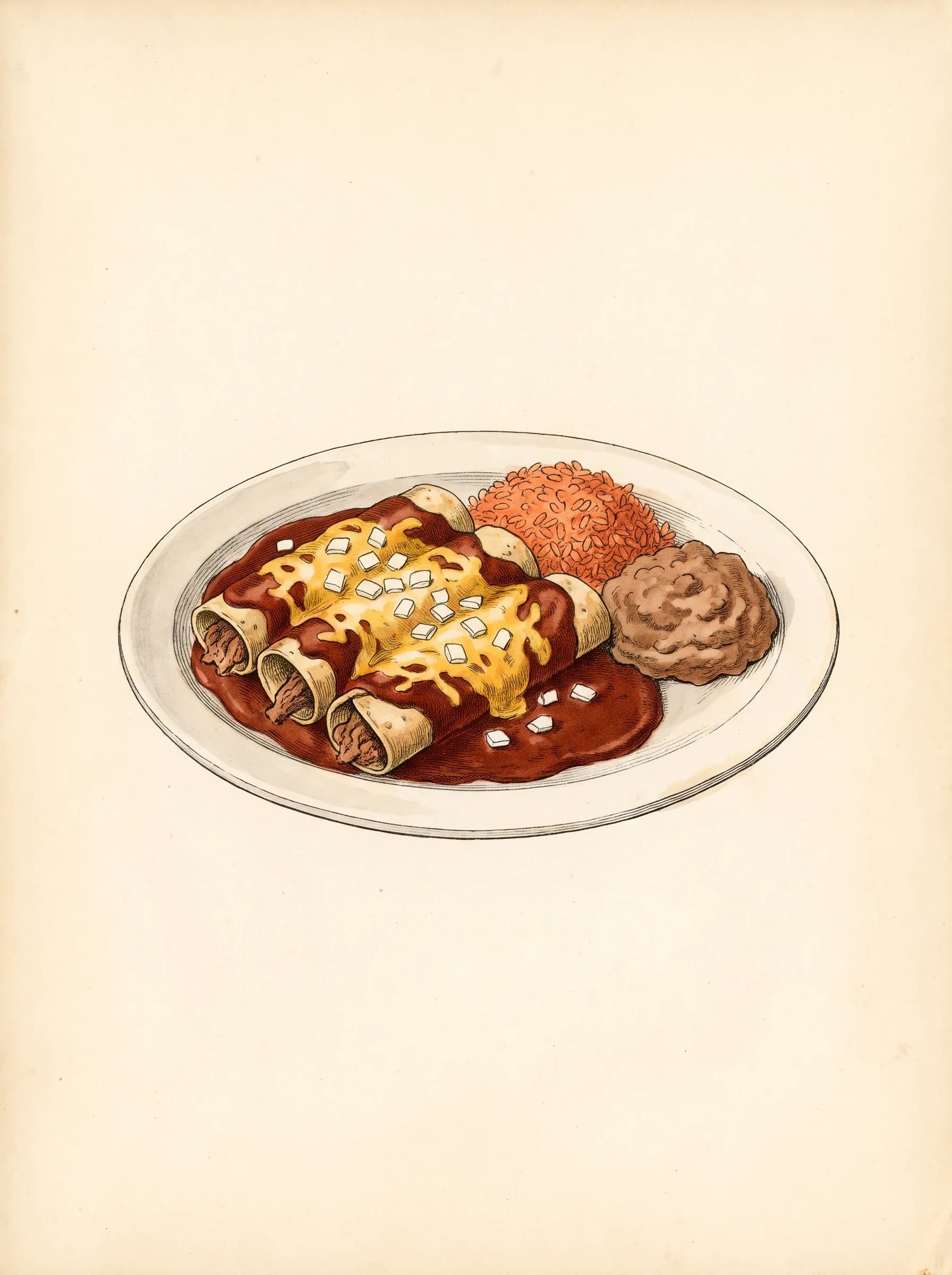
No. 9Texas, from San Antonio to Dallas and Houston
Chili Gravy
A chili roux for enchiladas.
Chili gravy is the brown-red sauce on Tex-Mex enchiladas and combination plates. It is a roux of fat and flour seasoned with chili powder and cumin and loosened with broth. Robb Walsh, the historian of Tex-Mex, calls it the lifeblood of the old-fashioned cuisine.
Beans: NeverTomatoes: OptionalPasta: Never