In New Mexico, chile with an e means the pod and the sauce made from it, and it goes on nearly everything. Red is dried ripe chile; green is roasted at harvest. The state even has an official question about it.
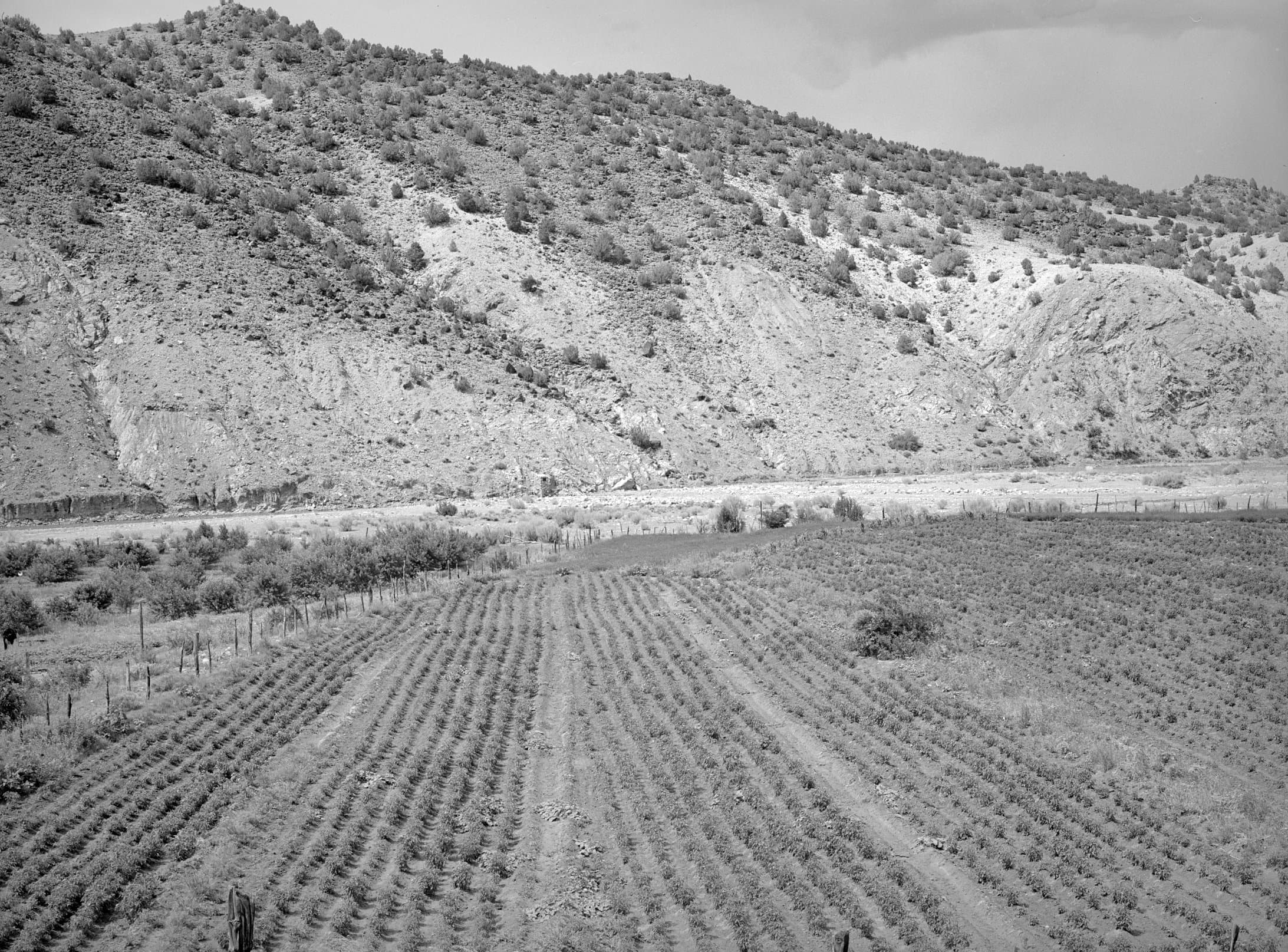
New Mexicans draw a clear line in spelling. Chile is the pepper and its sauce. Chili con carne is the Texas dish. Chile is the state’s signature vegetable crop. Most of it is grown in the south, in Doña Ana and Luna counties; the Hatch Valley lends its name to far more chile than it grows. Northern Chimayó keeps its own land race.
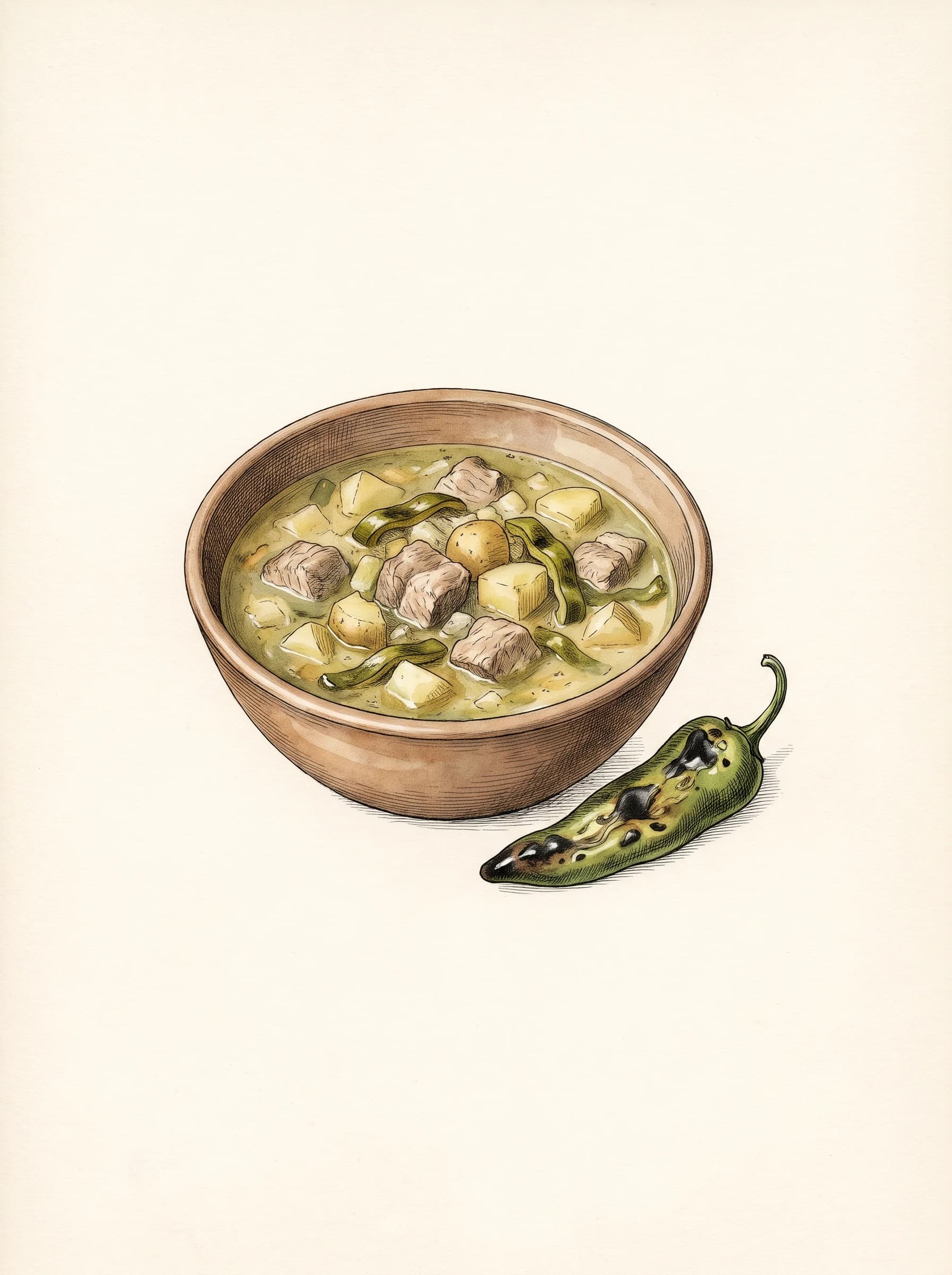
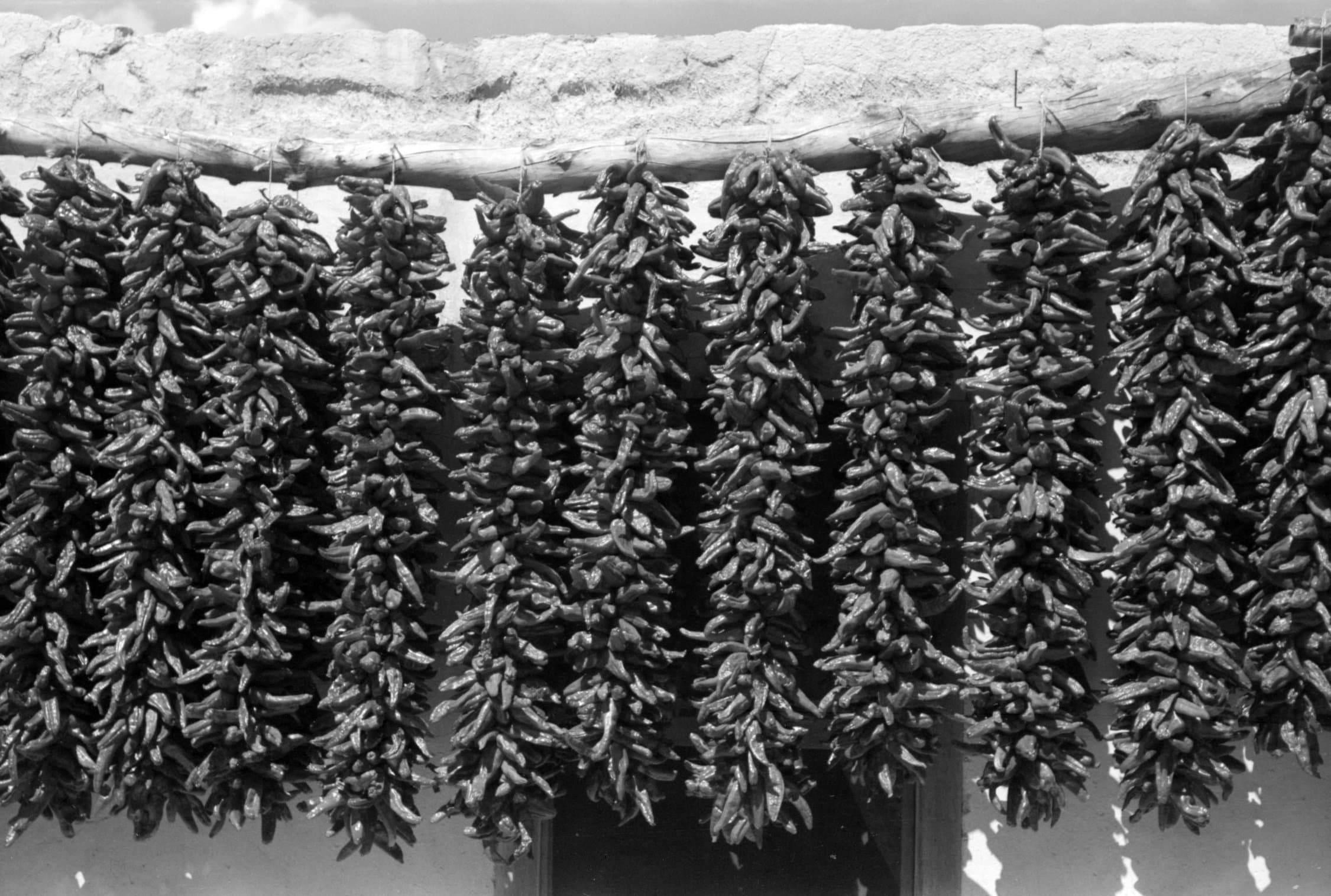
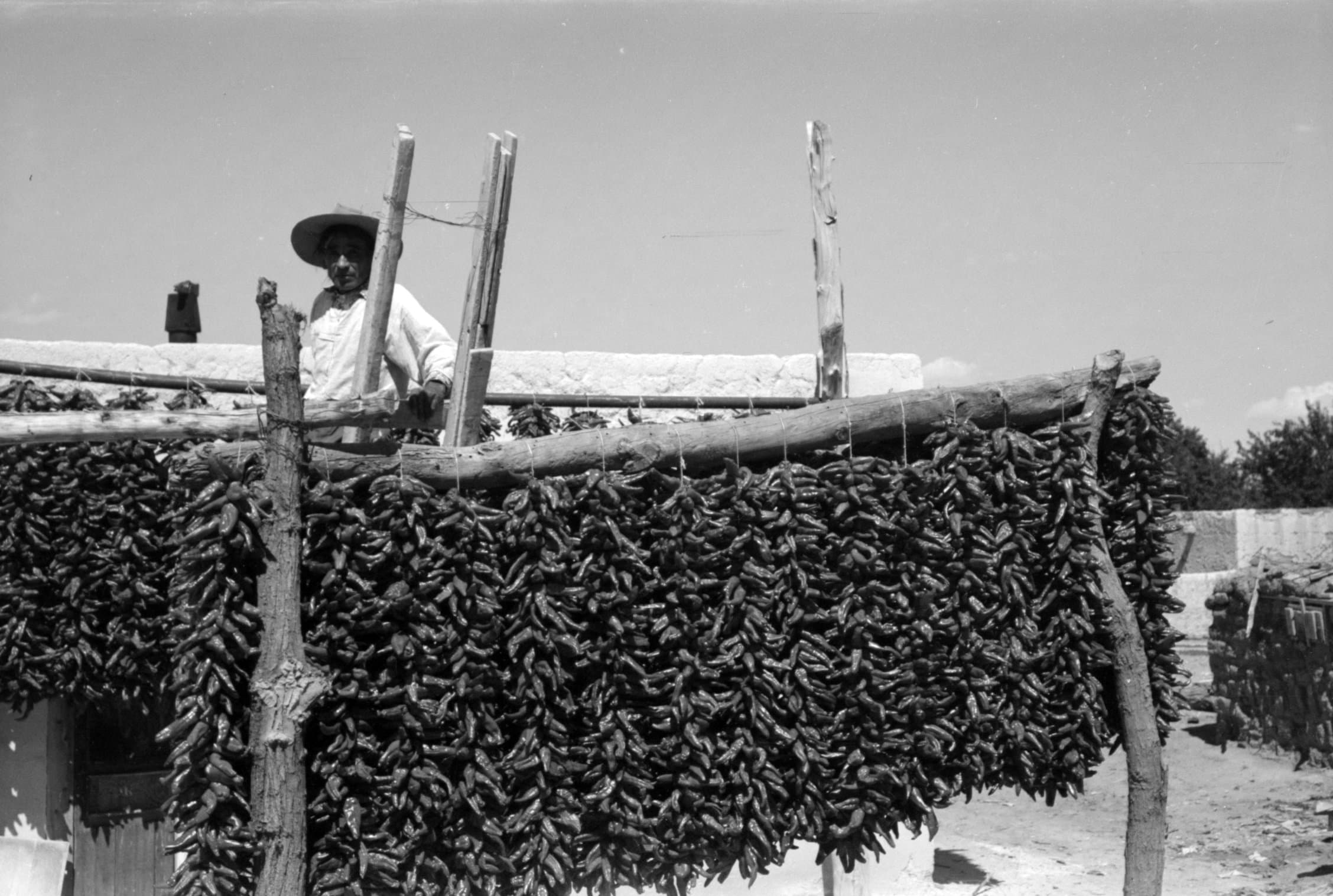
Green chile is roasted, peeled and frozen during the late-summer harvest. Red chile is the same pod left to ripen, then dried, often in hanging bundles called ristras, and pureed into a sauce with garlic, salt and sometimes oregano. Carne adovada, pork cooked down in red chile, and green chile stew with beef or pork, potato and tomato are two of the dishes most like a bowl of chili.
The modern New Mexican pod owes a lot to one breeder. Fabián García, at what is now New Mexico State University, developed New Mexico No. 9, the first New Mexican-type chile with dependable pod size and heat. Sources disagree on the release date: NMSU publications give 1913, other accounts 1917, and the Chile Pepper Institute’s biography of García 1921. Most New Mexican-type cultivars grown today descend from it. The Anaheim does not; it reached California from New Mexico around 1894.
In 1996 a joint memorial of the legislature asked the governor to proclaim the official state question: Red or green? A 2007 amendment to state law added the official answer, 'Red and green or Christmas.' Ordering Christmas, half red and half green, is a fairly recent habit; sources date it to the 1980s.
Visitors often expect a bowl of meat with beans. What arrives is usually an enchilada, burrito or plate smothered in sauce, with whole pinto beans on the side, cooked simply with salt pork and garlic.
Sources
- New Mexican cuisine, Wikipedia
- House Joint Memorial 3, 42nd Legislature, First Special Session (1996), New Mexico Legislature
- Fiscal Impact Report, HB 924 (2007), New Mexico Legislature
- NM Stat § 12-3-4, Justia
- Fabian Garcia, Chile Pepper Institute, NMSU
- The Chile Cultivars of New Mexico State University, 1913-2022, NMSU Circular 706