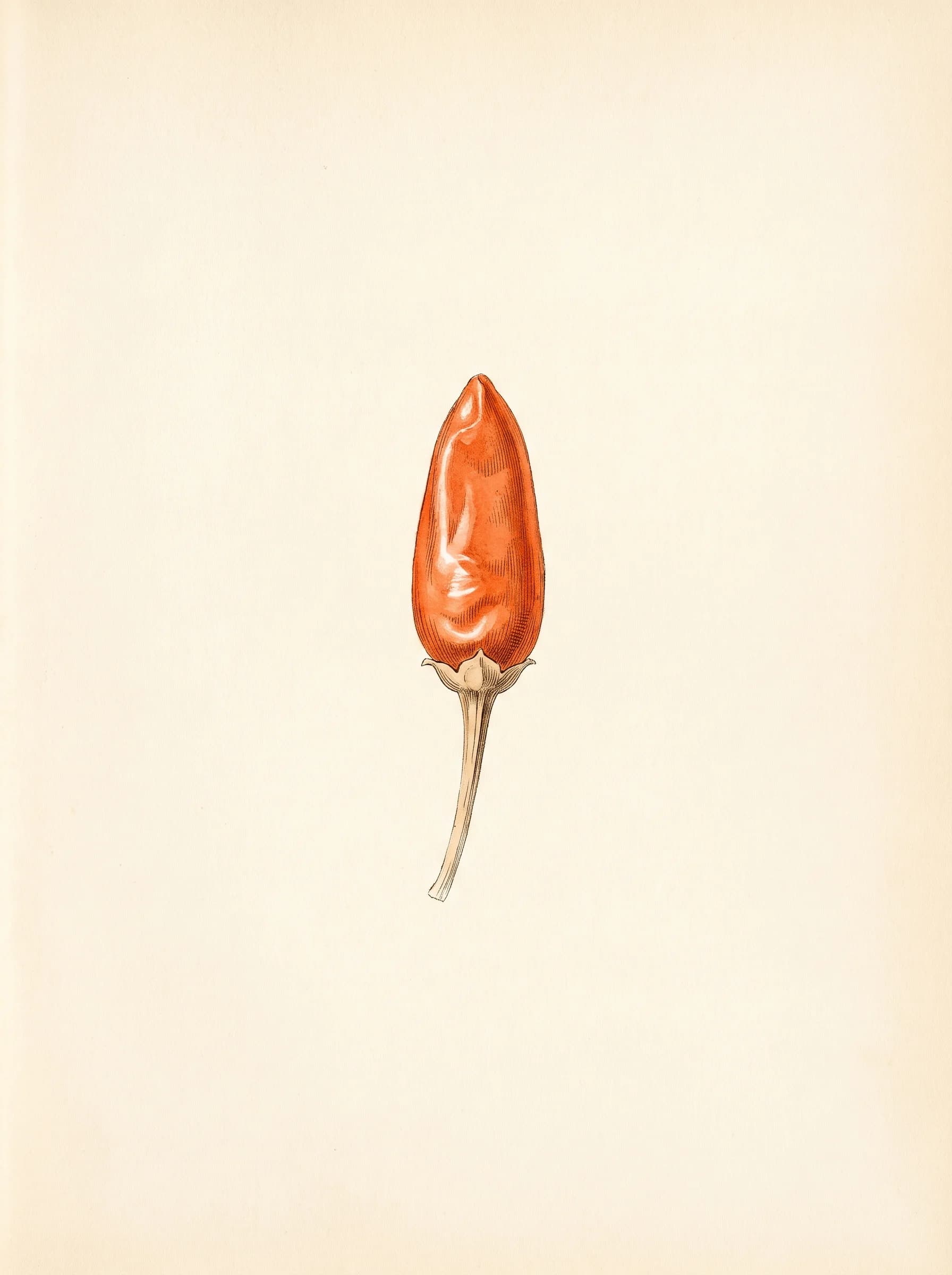
Pequín
Bright and citrusy, in America’s Test Kitchen’s description.
30,000 to 50,000 SHU, per Fiery Foods (DeWitt) heat scale. DeWitt’s piquín profile gives 50,000 to 100,000 for piquíns as a group. Log scale against the hottest chile in this guide.
The pequín, or piquín, is the cultivated cousin of the wild chiltepín: a small, oblong, pointed red pod, sometimes up to two inches long, and very hot. The name probably comes from pequeño, small. It is sold dried, whole or ground.
Dave DeWitt separates the two by shape. Wild, spherical pods are chiltepíns, and domesticated, oblong pods are piquíns or pequíns. Texans call the wild ones chilipiquíns. Fiery Foods' glossary adds the common names bird pepper and chile mosquito, and notes that pods of the type run from the size of a BB to that of a de árbol.
The commercial piquín is cultivated in Mexico and Texas. DeWitt counts about a thousand acres of small chiles under cultivation, mostly in Texas and New Mexico, and warns that packaged piquíns cannot be sorted into wild and cultivated. The Chile Pepper Institute’s own glossary describes chile piquín as a wild red pepper with a bullet shape. Paul Bosland lists piquín among the pod types sold dehydrated.
DeWitt’s heat scale sets the piquín at 30,000 to 50,000 Scoville units, beside cayenne and tabasco and below the chiltepín. His profile of the type gives 50,000 to 100,000 for piquíns as a group. America’s Test Kitchen pairs it with the de árbol as substitutes for each other.
Sources
- Pepper Profile: Piquin (Dave DeWitt, Fiery Foods & Barbecue Central)
- Glossary of Chile Pepper Terms (Fiery Foods & Barbecue Central)
- Chile Terminology (Chile Pepper Institute, New Mexico State University)
- Capsicums: Innovative Uses of an Ancient Crop (Paul W. Bosland, Progress in New Crops, ASHS Press, 1996; Purdue NewCROP)
- Heat Scale Updated (Dave DeWitt, Fiery Foods & Barbecue Central)
- All About Common Dried Chiles (America’s Test Kitchen)
- ICS: 2002 winning recipe, Ron Burt
- ICS: 2006 winning recipe, J.R. Knudson