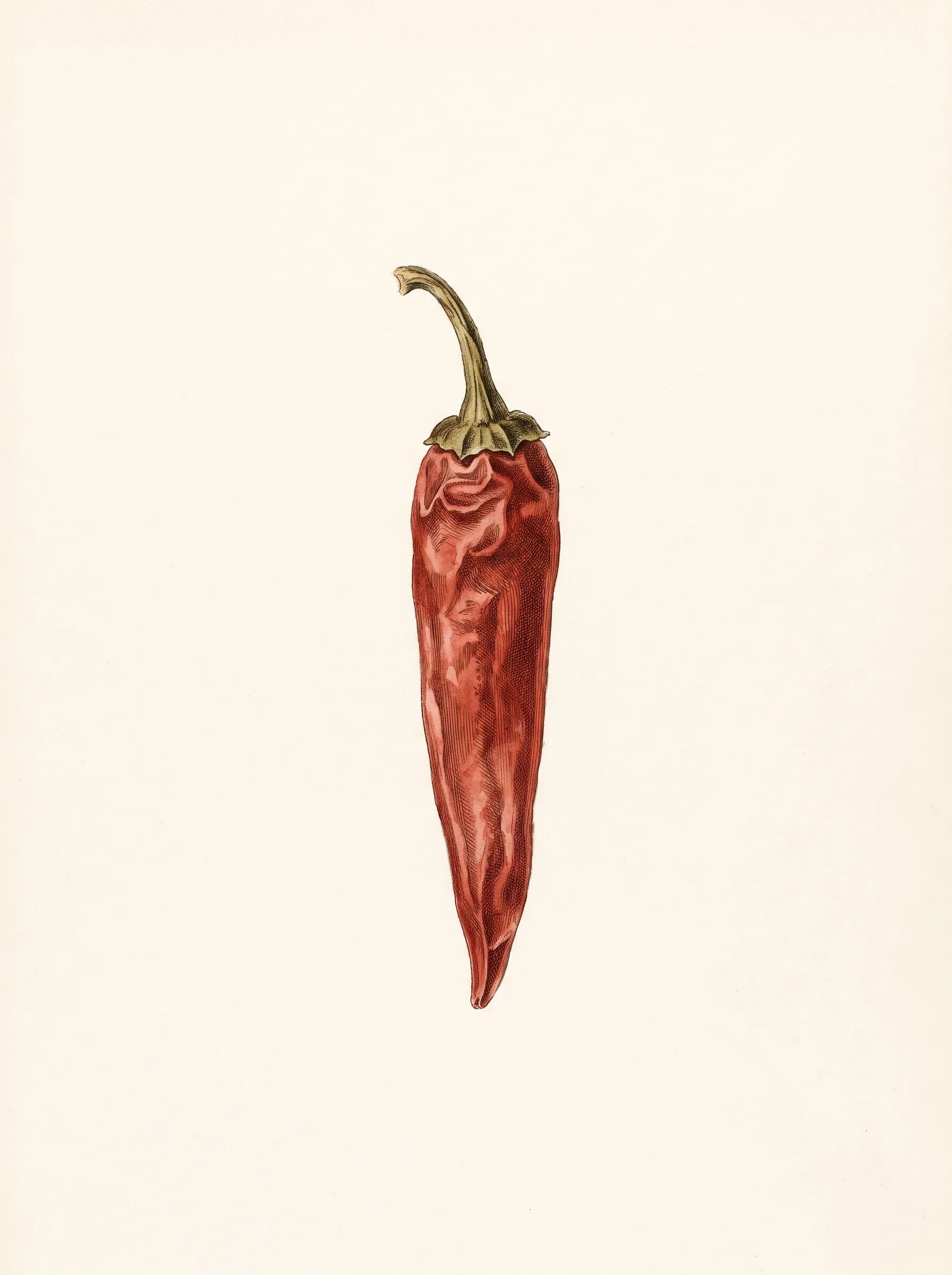
Paprika
Sweet and mild in American trade, valued more for color than heat; Hungarian grades run from mild to hot.
0 to 500 SHU, per Fiery Foods (DeWitt): U.S. paprika at 0, Hungarian hot paprika at 100 to 500. Log scale against the hottest chile in this guide.
Paprika is the dried, ground powder of mild red peppers. In the United States the word means a sweet red powder that may be made from any non-pungent, brilliantly red Capsicum annuum. It colors chili powder and has gone into Texas chili since the first Terlingua cook-off.
Paprika names a product more than a pod. The Chile Pepper Institute defines it as any non-pungent chile, red at maturity, used as a spice or for color. Paul Bosland writes that in the United States paprika is a sweet, dried, red powder, and that it is always non-pungent in international trade, though it may be pungent in Hungary. Dave DeWitt adds that American paprika comes mostly from New Mexican types bred to lack heat.
The date usually given for paprika’s arrival in Hungary, with the Turks, is 1526. Hungarian pods, grown around Kalocsa and Szeged, are three to five inches long. The powder is graded from Special Quality, the mildest and brightest red, to Hot, which is light brown. DeWitt notes that the hottest paprikas are the palest.
Color is what paprika sells. Bosland notes that about twenty carotenoids give chile powders their color, with capsanthin making up as much as 60 percent of the total in ripe fruit. America’s Test Kitchen’s homemade chili powder stirs a tablespoon of paprika into ground New Mexico chiles, cumin, oregano, garlic powder, and cayenne.
Sources
- Chile Terminology (Chile Pepper Institute, New Mexico State University)
- Capsicums: Innovative Uses of an Ancient Crop (Paul W. Bosland, Progress in New Crops, ASHS Press, 1996; Purdue NewCROP)
- Pepper Profile: Paprika (Dave DeWitt, Fiery Foods & Barbecue Central)
- Heat Scale Updated (Dave DeWitt, Fiery Foods & Barbecue Central)
- Chili Powder (America’s Test Kitchen)
- The Chili con Carne Project, Part 2: Chili Conquers the USA (Dave DeWitt and Nancy Gerlach, Fiery Foods & Barbecue Central)
- ICS: 1968 recipe, Woody DeSilva
- 1992 CASI Terlingua International Chili Champion recipe, Cindy Reed (CASI)
- 2004 CASI Terlingua International Chili Champion recipe, Roger Foltz (CASI)
- 2014 CASI Terlingua International Chili Champion recipe, Jason Goains (CASI)