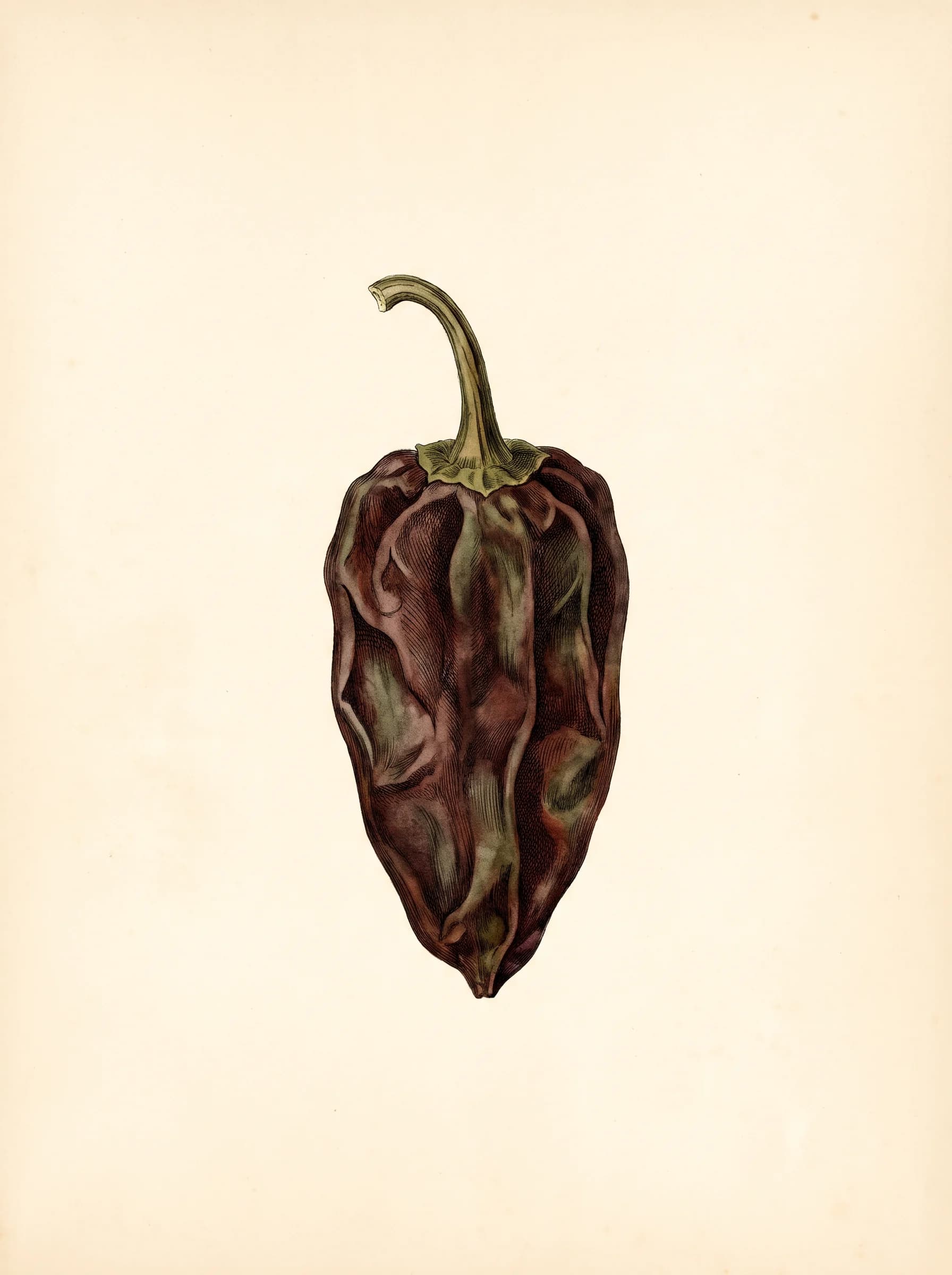
Peppers · Dried Poblano
Ancho
Rich and raisin-sweet, in America's Test Kitchen's description.
1,000 to 1,500 SHU, per Fiery Foods (DeWitt). Log scale against the hottest chile in this guide.
The ancho is a poblano left to ripen and then dried. Its name means wide, for the broad, flat, heart-shaped pod. It is mild, dark, and sweet, and it sits at the root of American chili powder.
The Chile Pepper Institute at New Mexico State University calls the ancho a pod type that was already grown in Mexico before Columbus. Picked green, the pod is sold as a poblano. Left on the plant, it turns red or brown, and dried it goes a very dark reddish brown, close to black. Dave DeWitt puts Mexican plantings at about 37,000 acres, against roughly 150 in the United States.
Fresh poblanos are roasted, peeled, and often stuffed for chiles rellenos. The dried anchos keep for months in a sealed jar, and they grind easily into powder. In Mexico they go into moles.
Chili history runs through this pod. In the 1890s William Gebhardt of New Braunfels, Texas, wanted to sell chili all year, but local chiles came only after the summer harvest. He imported Mexican anchos, ground them through a home meat grinder, and later blended them with cumin, oregano, and black pepper. The result became one of the first packaged chili powders.
Sources
- Chile Terminology (Chile Pepper Institute, New Mexico State University)
- Pepper Profile: Ancho/Poblano (Dave DeWitt, Fiery Foods & Barbecue Central)
- Heat Scale Updated (Dave DeWitt, Fiery Foods & Barbecue Central)
- All About Common Dried Chiles (America's Test Kitchen)
- The Chili con Carne Project, Part 2: Chili Conquers the USA (Dave DeWitt and Nancy Gerlach, Fiery Foods & Barbecue Central)
- Organic San Antonio Chili Powder, ingredient list (Spices Inc.)