For decades, women cooked and sold chili con carne from open-air stands in San Antonio's plazas, beginning on Military Plaza. Many accounts treat them as chili's origin story, while others see a dish with older and wider roots. The city's health department pushed them out, and sources disagree on exactly when.
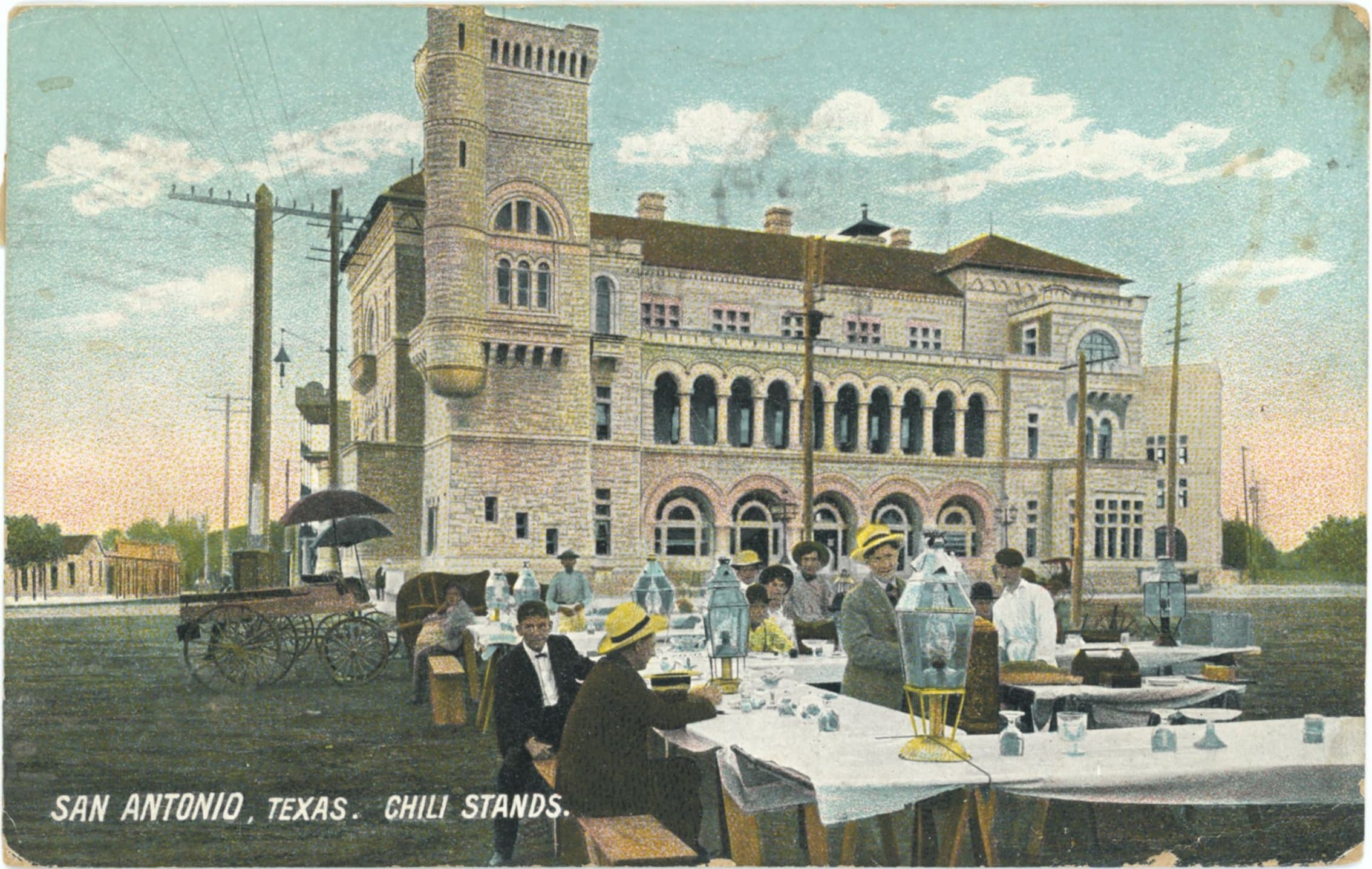
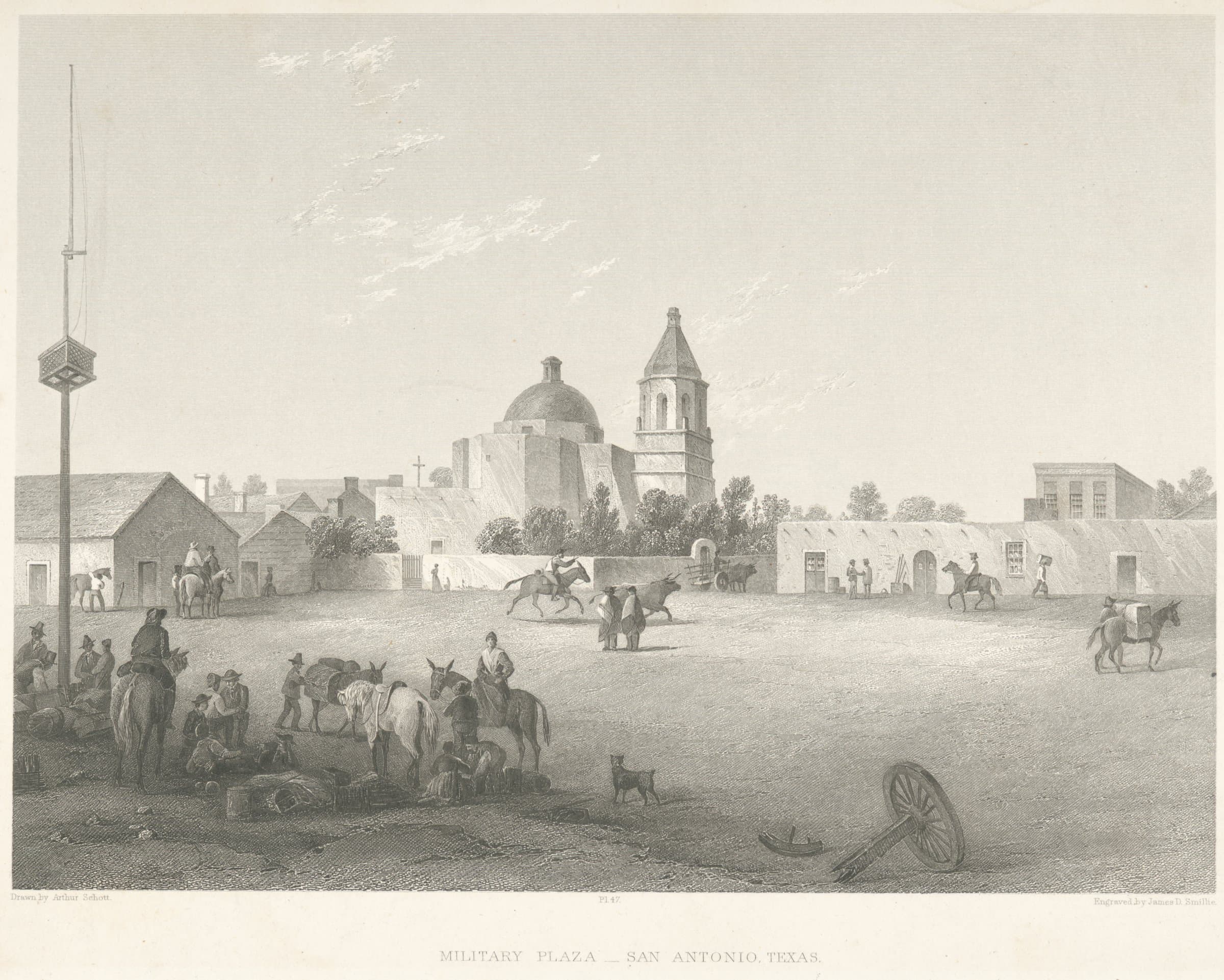
The Chili Queens were women who set up tables and lanterns in San Antonio's plazas at night and sold chili con carne, tamales and enchiladas. National Geographic places them on Military Plaza in the 1880s, cooking over mesquite fires beside wagons hung with colored lanterns. The Handbook of Texas also names Alamo Plaza and Market Square.
They moved as the city grew. Frank W. Jennings writes that the tables stood on Military Plaza, the city's first market, until City Hall was built there in 1889. After the Municipal Market House went up in Market Square in 1900, the cooks moved west to Haymarket Plaza and Milam Park. Barry Popik's newspaper search finds the phrase "chile queen" in a San Antonio paper in 1891, and National Geographic says a San Antonio Chili Stand helped spread the dish at the 1893 Chicago World's Fair.
Visitors wrote about them. Stephen Crane was unimpressed by the heat of the food. O. Henry, who lived in San Antonio in 1895 and 1896, set a short story among the stands.
Their end is dated several ways. Popik quotes a San Antonio Light report of 12 September 1937 saying the health department had ordered the queens out of Haymarket Square, where the city had already confined them. Jennings says the health department closed the stands for good in the early 1940s over their dishwashing methods. Texas Public Radio says they had been driven from the downtown plazas by the 1930s, after restaurant owners complained and new inspection rules followed.
Whether they invented chili is its own argument. Slate's Kriston Capps treats the Chili Queens as the dish's San Antonio source. The 1977 resolution naming chili the state dish, as CASI reprints it, ties the tradition to San Antonio more than 140 years back. National Geographic lays out rival origins: Aztec Mexico, washerwomen following the Mexican army, trail food of dried beef and chiles, Canary Islanders sent to San Antonio in the 1730s, and a legend about a Spanish nun. It concludes that no one knows for certain.